Madhubani, also known as Mithila art, is one of India’s most colorful and celebrated folk art traditions. Renowned for vibrant colors, intricate patterns, and symbolic storytelling, Madhubani has captivated artists and enthusiasts worldwide.
Though the art shares a common cultural origin, it is expressed through four distinct styles, each with unique techniques, motifs, and symbolism. Understanding these styles allows you to explore the richness of Madhubani art and create your own masterpieces.
The four traditional Madhubani styles are:
- Bharni (Filled Color Style)
- Katchni (Fine Line Style)
- Godna (Tattoo-Style Patterns)
- Tantrik (Mystical Motifs)
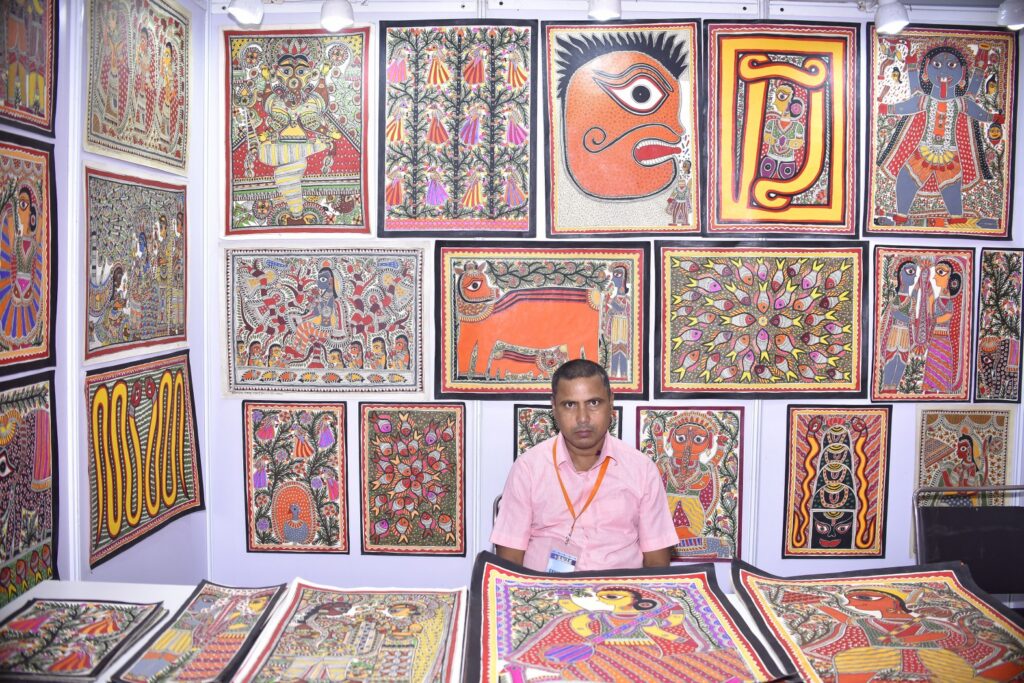
1. Bharni Style: Bold Colors and Vibrancy
Bharni is the most popular Madhubani style, characterized by rich, vibrant colors.
- Technique: Bold black outlines define figures, which are then filled with bright colors.
- Motifs: Gods and goddesses, peacocks, flowers, and other nature-inspired elements.
- Purpose: Traditionally used for religious occasions, festivals, and home decoration.
Beginner Tip: Start with simple motifs like a lotus or peacock. Outline in black, then fill with 2–3 bright colors for a classic Bharni effect.
2. Katchni Style: Intricate Fine Lines
Katchni emphasizes delicate line work and detailed patterns.
- Technique: Uses fine lines, cross-hatching, and repetitive motifs to create texture and depth.
- Motifs: Often for borders, backgrounds, or detailing within Bharni paintings.
- Purpose: Highlights subtlety and precision in Madhubani artwork.
Beginner Tip: Practice repeated patterns on scrap paper before adding them to larger designs.
3. Godna Style: Tattoo-Inspired Patterns
Godna is inspired by traditional Mithila tattoos, featuring geometric shapes and repetitive patterns.
- Technique: Focuses on black or dark lines with minimal or no color.
- Motifs: Triangles, diamonds, dots, and other geometric shapes.
- Purpose: Used to decorate walls, fabrics, and ceremonial objects.
Beginner Tip: Start with simple geometric shapes, then gradually add repetitive patterns for authentic Godna style.
4. Tantrik Style: Mystical and Spiritual
Tantrik Madhubani focuses on spirituality and mystical symbolism.
- Technique: Combines intricate line work with selective coloring.
- Motifs: Deities, yantras, sacred triangles, and symbolic designs.
- Purpose: Traditionally used for rituals and invoking spiritual energy.
Beginner Tip: Begin with simple mystical symbols, then gradually add intricate details to create a balanced Tantrik composition.
Why Learning These Styles Matters
Exploring Madhubani’s different styles allows artists to:
- Explore a wide variety of motifs and techniques
- Mix and match styles for unique artwork
- Connect with India’s cultural and spiritual heritage
- Practice mindfulness and patience through intricate designs
Beginner Tips to Get Started
- Choose a Style: Bharni for colors, Katchni for lines, Godna for patterns, Tantrik for spirituality.
- Start Small: Practice motifs on paper before moving to canvas.
- Use Bold Outlines: Black outlines define your design and enhance visual clarity.
- Limit Colors: Stick to 2–5 colors initially for harmony.
- Be Patient: Intricate patterns take time—enjoy the process!
Experience Madhubani Art Live
If you’re in Bengaluru this December (5–7 Dec 2025), visit The Haat of Art Exhibition at Jaya Mahal Palace. Witness live demonstrations of Bharni, Katchni, Godna, and Tantrik styles, meet talented artists, and gather inspiration to create your own folk art masterpiece.
Venue: Jaya Mahal Palace, Bengaluru
Dates: 5 – 7 December 2025
Timings: 10:00 AM – 8:00 PM
Entry: Free and open to all (register now)
Take the first step today: Pick a style, practice a motif, and let your creativity flow one stroke at a time.
Conclusion: Embrace the Diversity of Madhubani Art
Madhubani art is more than decoration—it’s storytelling, mindfulness, and cultural expression. Each style—Bharni, Katchni, Godna, or Tantrik—offers a unique way to explore creativity and connect with India’s artistic heritage.
Start your Madhubani journey: choose a style, pick up a brush, and create your own vibrant masterpiece. Every stroke tells a story.